


Inquiries @ the Lab: An Archive
NEPA’s Factoring into Fossil Fuel Investments
With price volatility like almost no other commodity, oil and gas investments demand very careful filtering by those about to risk the capital. NEPA plaintiffs have lately stepped up their  opposition to these investments upstream and down, making the filtering that much more focused on NEPA law.
Arctic Dreams
Royal Dutch Shell keeps trying to find oil in the Chukchi Sea. The Kayaktivists and others keep hampering their efforts. As the Sierra Club and others head back to court with another NEPA complaint, this post considers the impossibility of assessing the probable (or possible) impacts of this Arctic drama.
‘Clean Power’ v. Coal in the Four Corners
If there’s a war on coal, the mines and generating stations in the Four Corners region are winning it. This post considers a recent EIS that obscured the major choices being made in that region today.
Crude By Rail
A major factor in the profitability of “tight oil” is its delivery costs. The Lab took an extended look at crude-by-rail recently. A first post introduces the spate of derailments and the “DOT 111,” an outmoded tank car design at the heart of the controversy. A second post examined the afterthought of a NEPA document (a quite abbreviated EA/FONSI) in the Department of Transportation’s attempted regulatory fix. It questions whether the rent-seeking dead-end reached in the Department’s rulemaking could’ve been avoided. (Dec. 2014-Jan.2015)
DOT finalized its rule May 1, 2015. In a final post, the Lab looked back on the rulemaking and ‘what might have been’ had NEPA played a more central role in organizing the analysis and deliberations that comprised the department’s response to oil train derailments. (May 2015)
Exporting LNG
A new liquified natural gas terminal in the Chesapeake Bay known as Dominion Cove Point promises significant environmental impacts around the region. The Federal Energy Regulatory Commission argues they’ll be minor impacts. This post questions FERC’s underlying logic. (Oct. 2014)
UPDATE: This new report from Brookings suggests that new liquefaction plants like Dominion Cove Point might be facing much stiffer head winds financially than were expected. (July 2015)
NYS’s Ban on Fracking
The New York Environmental Quality Review Act is like a miniature NEPA. NY’s recent Supplemental “Generic” EIS on fracking shows how the politics of fracking have evolved in six years. In 2009, the focus began on fracking’s localized risks. By 2015, as this post details, it had pivoted to the global implications of continued fossil fuel development. (June 2015)
Pipeline Nation
The Keystone XL pipeline broke new NEPA ground in several respects. This post examines the 11 volume FEIS and questions the central assumptions underlying its conclusion that KXL won’t have much impact on future GHG emissions. (Sept. 2014)
When pipeline systems are built and/or upgraded, the segments under construction are always part of a larger whole. For NEPA’s “hard look” at environmental impacts, what should count: the segment or the whole pipeline? This post examines a perennially hard question that NEPA practitioners confront in many contexts. (Oct. 2014)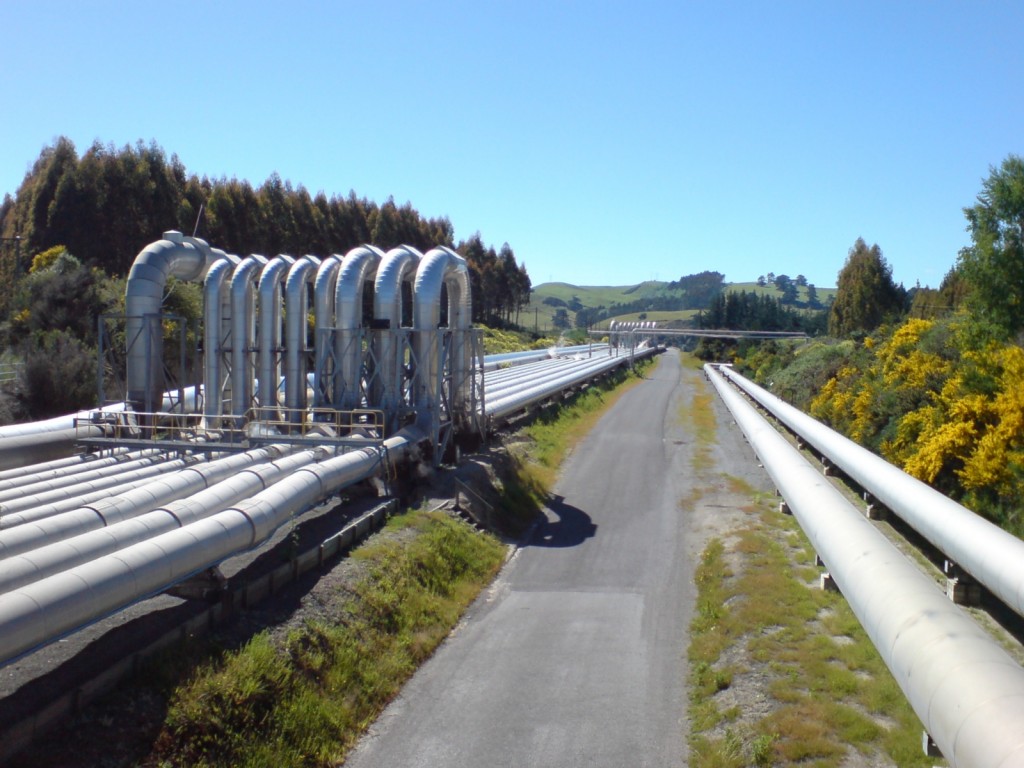
As pipelines age, their failure prospects typically increase. NEPA’s handling of their continued permissions to operate would, if it were more risk-focused, reflect that basic fact. This post considers one aging pipeline in northern Michigan. (March 2015)
Counting the greenhouse gas emissions “caused” by an investment in competitive markets, e.g., the KXL pipeline, requires a maddeningly complex sort of measurement. U.S. EPA’s final comments on the KXL pipeline’s EIS shows how even different government agencies can disagree about additionality. (February 2015)
“Upstream” Investments
When new oil fields, coal mines or other investments are being filtered, an increasingly important factor in the inevitably NEPA lawsuit (supposing U.S. Government approval is needed) is what greenhouse gas emissions and impacts are “reasonably foreseeable” therefrom. This post considers the law on that notion generally and this post considers a case applying it to the facts of one coal mine in Colorado.
NEPA’s Encounters with Restoration
Dam Removal means legacy sediment. How should NEPA help communities decide between the risks of breaching an old dam and the potential benefits of restoring continuity and connectivity to a river system? This post considers one recent attempt in the Sandusky River watershed.
Reintroducing fire to fire adapted ecosystems where it’s been excluded for decades is hard and costly work. The land management agencies have had their hands full even attempting it. Lately, though, the pressure to do something seems to have overwhelmed their capacities to do it right. This post examines a litigation over 100 acres of fuels work in the Lake Tahoe basin.
Herbicides and NEPA Relief
A first post recalls the herbicide cases which used NEPA to drastically curtail the Forest Service’s use of phenoxy herbicides like 2,4-D and 2,4,5-T in the 1970s. A second post compares the Supreme Court’s modern doctrines on the availability of injunctive relief to what unfolded in the phenoxy herbicide cases in the Pacific Northwest. Ironically, the world’s most commonly used herbicide, glyphosate, played a starring role in the Court’s reversal of course. What’s next? (April 2015)
The CHP Express
A new transmission conduit proposes to bring Quebec’s cheap hydro-generated electricity to greater NYC. This post questions the EIS done for the proposal and whether the “statement of purpose and need” was legitimate. (Aug. 2014)
Yucca Mountain SEIS
With the Yucca Mountain repository for spent nuclear fuel again showing signs of (political) life, this post considers the role a supplemented EIS may play in the eventual licensing and operation of the nation’s only central repository for spent nuclear fuel. (Feb. 2015)
The Law of Models
Garbage in = garbage out, of course. But plenty of legal doctrines instruct courts not to question agencies’ selection of modeling inputs and techniques as matters uniquely within their expertise. This post is about one court that had the stuff to say ‘enough is enough.’
Big Thorne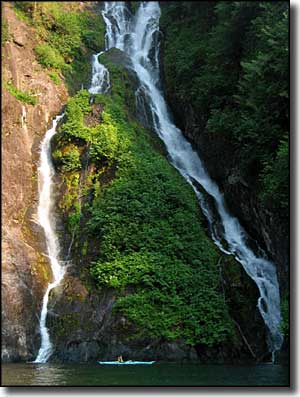
A massive logging plan in the Tongass National Forest was prepared and finalized in July 2013. Did the Forest Service gather and consider the requisite information about the logging’s likely effects on resident wildlife populations? This post considers the lawsuit’s need for an immediate injunction. (March 2015)
NEPA’s Valuation Methods
What is the best way to value leaving things undecided? This post considers the Bureau of Ocean Energy Management’s valuation of the “no action” alternative and the possibility that “option pricing” will eventually find its way into NEPA analyses. (March 2015)